
Basement Insulation and Soundproofing in Manassas, VA
Basement insulation and sound control are related to the walls and ceiling, but they solve different problems. Insulation can improve surface temperatures and comfort when the assembly fits the foundation conditions. Sound control manages transmission or echo only when the proposed layers address the actual path.
Neither goal should be reduced to filling every cavity with one product. Moisture, air movement, framing, doors, ducts, outlets, lights, and rigid connections all affect the finished result.
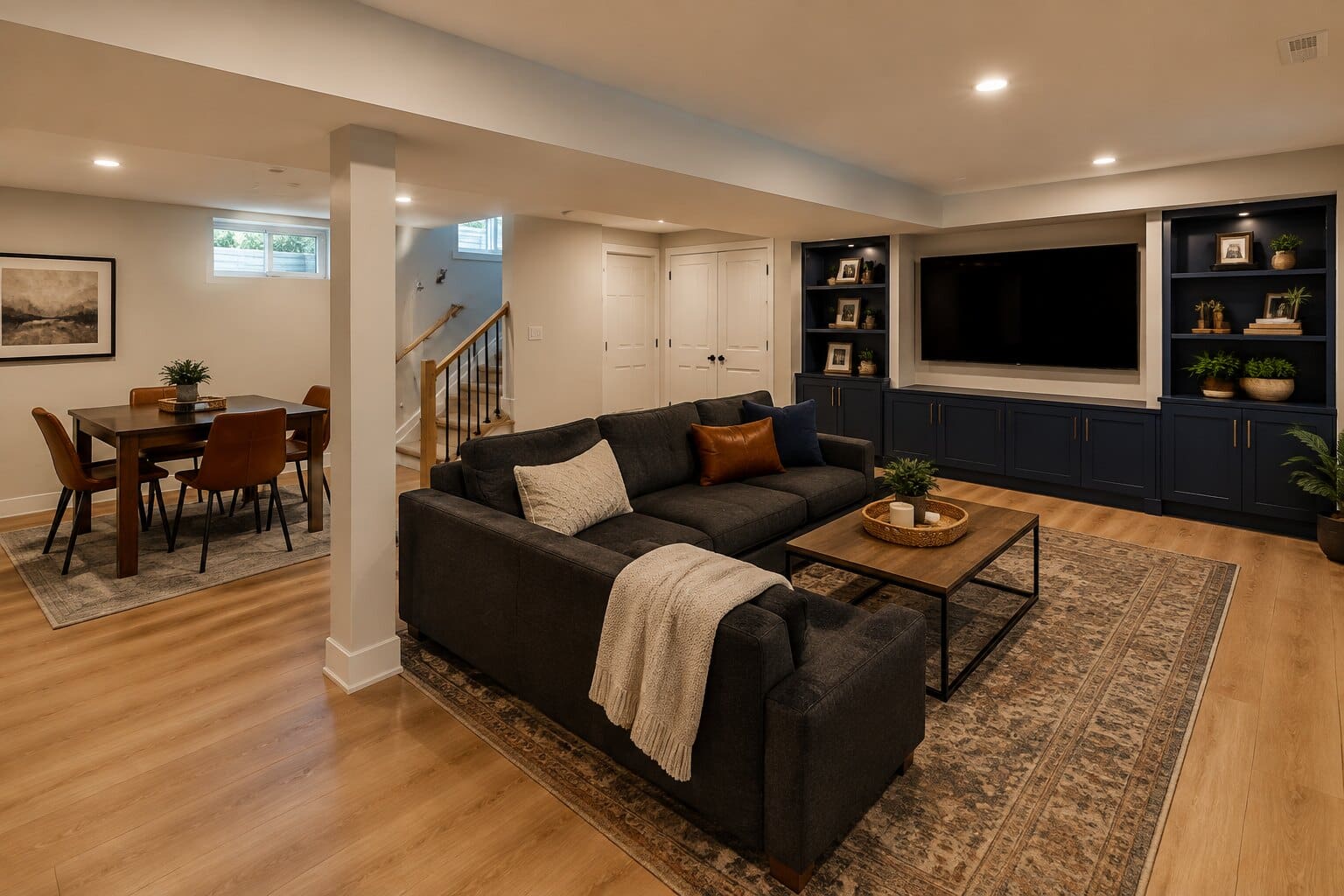
Resolve Moisture Questions Before Insulating
Document damp odors, staining, condensation, leaks, water entry, efflorescence, sump events, and previous repairs. The EPA moisture guide emphasizes controlling the moisture source and drying affected materials. New insulation and finishes should not conceal active water, mold, drainage, or foundation problems.
This site does not offer standalone waterproofing, foundation repair, or mold remediation. If those conditions are suspected, obtain the appropriate evaluation before a remodeling provider closes the wall.
Match the Insulation Strategy to the Assembly
The Department of Energy's basement insulation profile describes the moisture challenges around basement walls and warns that some combinations of fibrous insulation and impermeable interior layers can remain damp or trap moisture. Product choice must be evaluated as part of the full wall, rim, floor, and air-sealing approach.
Ask the provider to identify the existing foundation, drainage and moisture assumptions, insulation location, continuity, air-control layers, framing relationship, fire-protection details where applicable, and how the assembly transitions at the rim, stairs, windows, and partitions.
Define the Sound Problem Precisely
Name the source, the receiving room, the time of day, and the type of sound. Voices and television, music bass, footsteps, exercise impacts, plumbing, and mechanical equipment travel differently. A treatment intended to reduce echo inside a room is not automatically a treatment for transmission through the structure.
For a basement entertainment room, identify speakers, subwoofer, seating, and sensitive rooms above. For bedrooms or offices, identify speech privacy and mechanical noise concerns. Set a realistic improvement goal rather than asking for a basement to be completely soundproof.
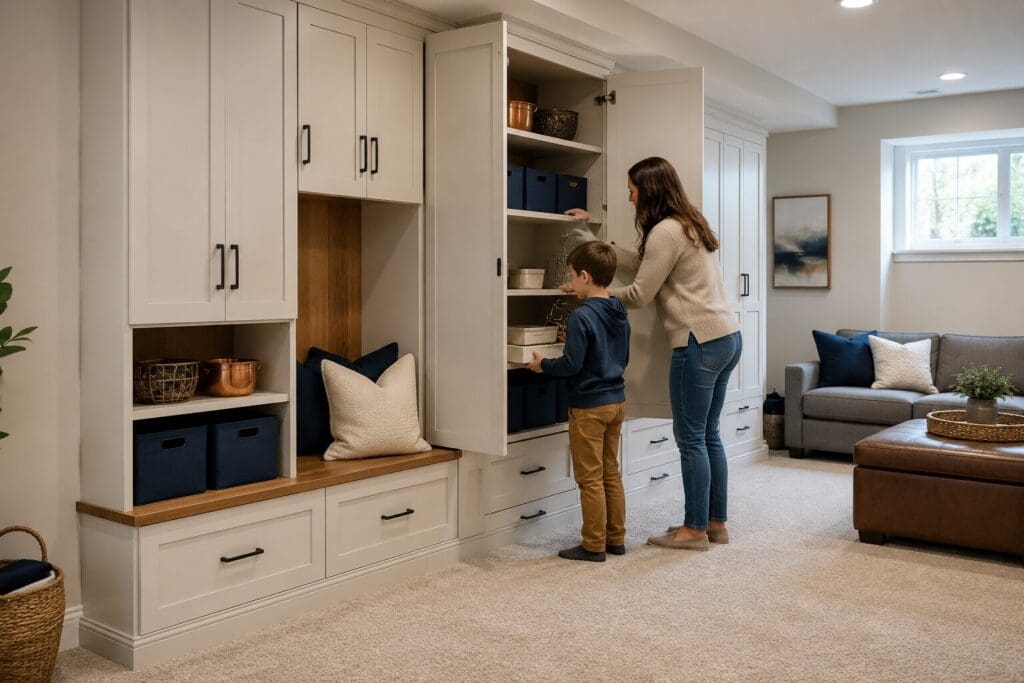


Evaluate the Whole Sound-Control Path
Sound can move through drywall, framing, joists, doors, stairs, ducts, outlets, recessed fixtures, access panels, and gaps. Useful strategies may add absorption within cavities, mass, separation between layers, sealing, quieter equipment, or layout changes. The right combination depends on the path and available height and space.
Coordinate penetrations with ceiling and lighting design. Ask how doors, return-air paths, electrical boxes, ductwork, and required access will be handled; these details can limit the result even when the main wall or ceiling assembly is upgraded.
Coordinate Comfort With Heating and Cooling
A cold basement may involve surface temperatures, air leakage, distribution, humidity, or equipment operation rather than insulation alone. Discuss how supply and return air, closed rooms, thermostatic control, and dehumidification assumptions relate to the proposed finish. Mechanical changes may require design and permits.
Use the basement finishing page when insulation is part of a complete unfinished-space project. Sequencing is critical because air sealing, framing, trade rough-ins, inspection, insulation, and finish layers must be coordinated before the walls close.
Compare Proposals by Assembly and Limits
Require each proposal to name the areas treated, materials and thicknesses, framing or isolation details, sealants, doors, ducts and penetrations, ceiling conditions, access provisions, fire and finish layers, disposal, permits, and exclusions. A product name without an assembly description is not enough.
Ask what improvement the provider expects and what is not promised. Field conditions, flanking paths, workmanship, and untreated areas affect performance. Use the cost guide to place the upgrade within the whole project and separate essential moisture and comfort work from optional acoustic features.
Frequently Asked Questions
No. Acoustic treatment usually controls reflections and echo within a room. Sound-control construction aims to reduce transmission between spaces. Some materials contribute to both goals, but the design, placement, and performance target differ. Ask the provider which problem each item in the proposal addresses.